Rituals as Memory
SoulDraftLife™ | The Safety Mind | SM‑17
Rituals as Memory
Rituals as Memory
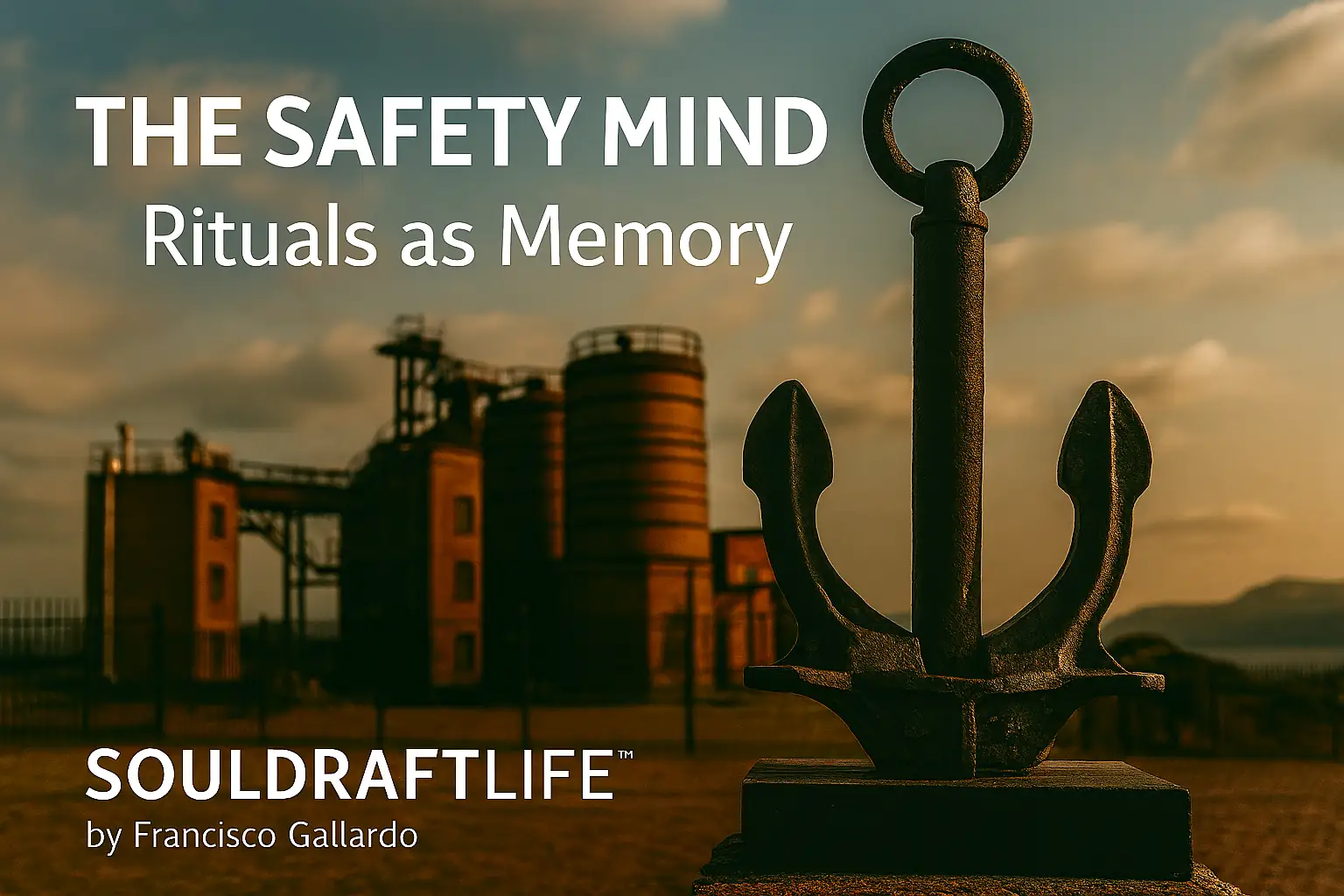
In every culture, rituals are more than habits. They are anchors that hold meaning in place. In safety, they become the invisible threads that keep us steady when systems drift.
Please think of the firefighter who checks every piece of gear before a shift, not because he doubts the equipment, but because the ritual is a memory of lives saved and lost. Or the pilot who runs through the same checklist before every flight, even after thousands of hours in the air. These rituals are not about efficiency; they are about remembrance. They remind us that safety is not guaranteed; it is renewed daily through deliberate action.
Rituals as Memory vs. The Weight of Routine
In SM‑13, The Weight of Routine, we explored how repetition without awareness becomes drift, how tasks lose meaning when performed on autopilot, and how a culture quietly weakens when presence is replaced by habit. SM‑17, Rituals as Memory, moves in the opposite direction. Ritual is the counterweight. Where routine becomes heavy, ritual becomes intentional. Routine forgets; ritual remembers.
A clear example of these lives in SM‑5, The Safety Moment, one of the earliest SoulDraftLife Safety Mind publications. It wasn’t a mechanical step; it was a living reminder, a brief pause to look, to recognize risk, and to honor the lessons already earned. SM‑5 worked as a ritual because it carried intention, purpose, and memory. It was repetition, yes, but repetition with meaning.
How They Differ in Practice
A Routine (The Weight of Routine)
- Is repeated without awareness
- Becomes automatic and invisible
- Drifts toward shortcuts and normalization of risk
- Loses connection to purpose
- Feels heavy because it lacks intention
- Weakens culture through unconscious repetition
A Ritual (Rituals as Memory)
- Is repeated with awareness
- Reinforces presence and attention
- Carries the memory of lessons learned
- Protects against drift by anchoring intention
- Feels meaningful because it honors purpose
- Strengthens culture through conscious repetition
Anchor Point
Without rituals, memory fades; without memory, safety drifts. The Safety Mind treats every ritual as a living anchor, not a checkbox.
When rituals are practiced with intention, they become living memory. They carry the weight of past lessons into the present moment, ensuring that what was once learned in hardship is not forgotten in routine.
Anchors as Stability
Anchors prevent drift. They are the small, repeated actions that keep culture from unraveling under pressure.
Consider the construction crew that begins each morning with a “stretch and flex” session. It may look trivial to an outsider: a few minutes of movement before work, but for the crew, it is an anchor: a shared pause that signals readiness, unity, and awareness before the day’s risks unfold.
Or the hospital team that always pauses for a “time‑out” before surgery. The anchor is not the checklist itself, but the moment of collective focus, a ritualized pause that steadies the team against the drift of haste or assumption.
Anchors are not heavy; they are steady. They do not slow us down; they keep us aligned. Without them, systems drift, habits erode, and culture weakens. With them, even under pressure, we remain tethered to what matters most.
The Safety Mind Response
Rituals are not decoration. They are the architecture of memory. Anchors are not burdens. They are the quiet stabilizers of culture.
The Safety Mind Asks
Which rituals in your team still carry meaning, and which have become empty gestures? Which anchors keep you steady when pressure tempts you to drift?
Reflection
Identify one ritual worth reviving with intention this week. Ask not only what you do, but why you do it, and let that “why” become the anchor.
Lee este artículo en Español: Rituales como Memoria
Practical Note
SoulDraftLife™ uses SHOKZ bone‑conduction headsets in environments where situational awareness, communication, and hearing protection must coexist.
Bone-conduction technology enables communication and environmental awareness while wearing single or double-hearing protection, without isolating the wearer from their surroundings.
Depending on context, this includes models designed for industrial communication, training, and coordination, as well as active or lifestyle use, such as the OpenComm, OpenMeet, OpenRun Pro, OpenRun, OpenDots, and OpenFit series.
Previous Safety Moments:
SM‑1: The Safety Mind Introduction | SM‑2: What Is The SAFETY MIND? | SM‑3: The Safety Mind Disclaimer | SM‑4: The Psychology of Risk | SM-5: The Safety Moment | SM-6: When Mind Becomes Moment | SM-7: The Human Side of Safety | SM-8: The Perception of Risk | SM-9: Why We Misjudge Risk | SM-10: Human Error and Bias | SM-11: Group Dynamics and Silence | SM-12: Fatigue, Distraction, and Focus | SM-13: The Weight of Routine | SM-14: Frameworks as Scaffolding, Not Cages | SM-15: The Illusion of Control | SM-16: The Blind Spot of Normalization |
SoulDraftLife by Francisco Gallardo – January 7, 2026
SoulDraftLife runs on Kinsta because a legacy deserves a rock‑solid foundation.