The Human Side of Safety
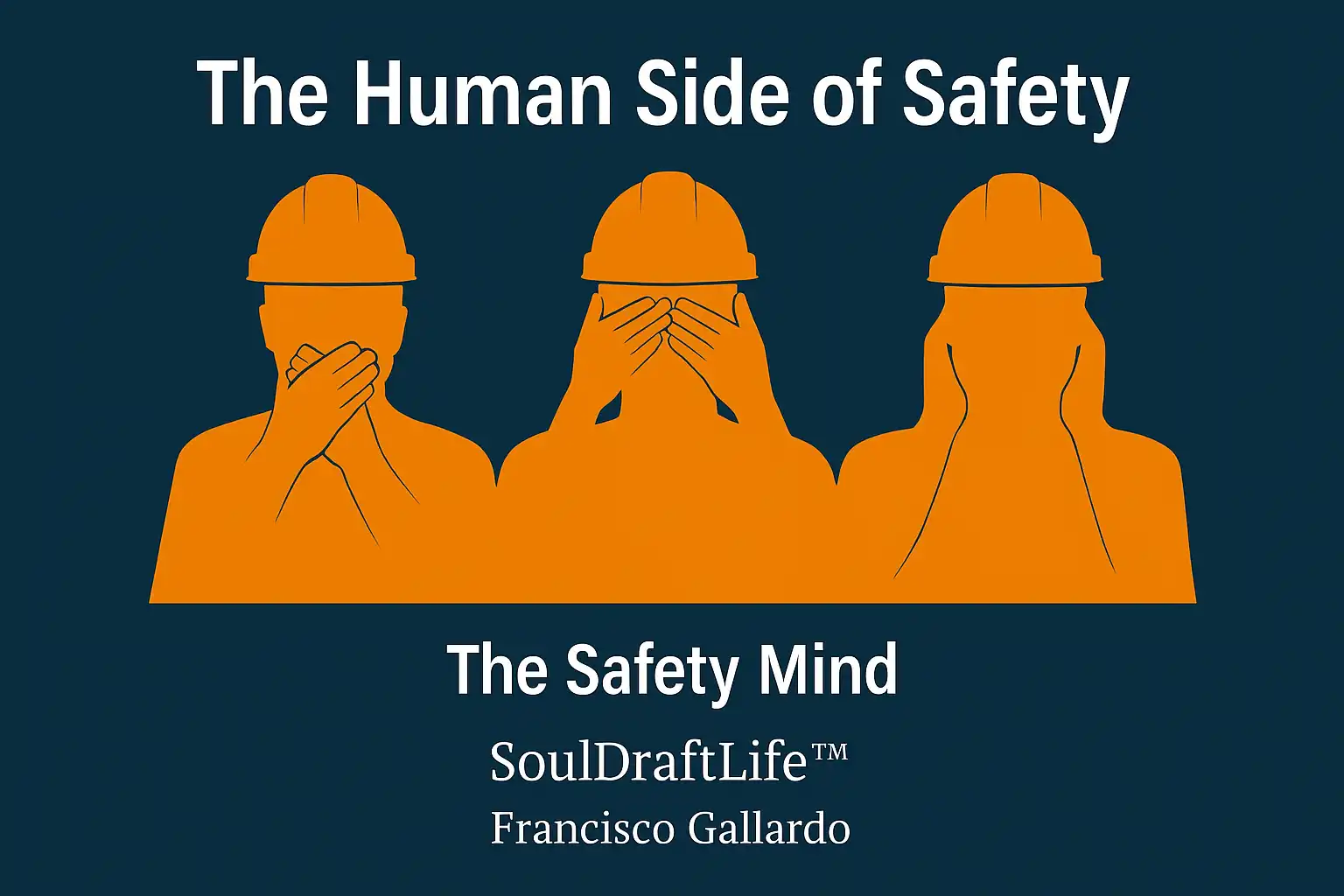
SoulDraftLife™ | The Safety Mind | SM‑7
The Human Side of Safety
Seeing People Before Procedures
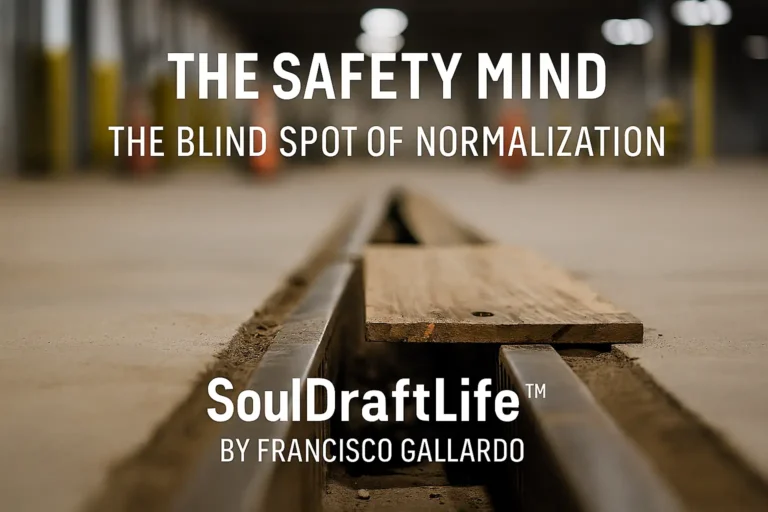
Danger often hides in the ordinary. A misplaced tool, a step taken without thought, a routine so familiar it feels harmless. These moments rarely announce themselves with alarms. They slip past us quietly, disguised as normal. The real risk is not always in the object itself, but in how our attention drifts away from it.
Perception Is Fragile
The mind edits reality. Familiarity convinces us that what we see every day cannot hurt us. Confidence whispers that skill or experience makes us immune. Silence suggests that if no one else reacts, it must be fine. Yet silence is not neutral; it is an unspoken agreement. And repeated agreements become culture. When culture normalizes shortcuts, perception bends until the unsafe feels safe.
Editorial Note:
The Safety Mind SM‑5 and SM‑7 both begin in the ordinary. SM‑5 framed the environment: how routine surroundings conceal risk. SM‑7 reframes the ordinary through people: how perception, silence, and culture bend reality until unsafe feels safe. The overlap is intentional: the same stage, seen from two different angles.
Safety Begins with People
Procedures matter, but they are not enough. Safety is not stored in binders or dashboards. It lives in the worker who pauses before climbing, the colleague who speaks when others stay quiet, the leader who admits that even long experience can mislead. The Safety Mind begins by seeing people, not just procedures. It is in the recognition that human judgment, fatigue, and bias shape every decision. To protect life, we must first understand the people making those decisions.
The Safety Mind Asks
- When you look at your team, do you see procedures first, or people?
- How often do you pause to ask what pressures or fears shape their silence?
- In moments of risk, do you invite voices that challenge your assumptions?
- When safety is tested, do you measure success by compliance or by the courage to speak?
Reflection
Safety begins with the willingness to see each other as humans before we see each other as roles. Procedures and checklists matter, but they are only as strong as those who carry them. The next time you walk into a safety conversation, notice what is said and who is missing from the dialogue. Extend one more invitation, ask one more question, and create another chance for someone to be heard. Because the human side of safety is not a soft dimension, it is the foundation on which every system stands.
Lee este artículo en Español: El Lado Humano de la Seguridad
Practical Note
SoulDraftLife™ uses SHOKZ bone‑conduction headsets in environments where situational awareness, communication, and hearing protection must coexist.
Bone-conduction technology enables communication and environmental awareness while wearing single or double-hearing protection, without isolating the wearer from their surroundings.
Depending on context, this includes models designed for industrial communication, training, and coordination, as well as active or lifestyle use, such as the OpenComm, OpenMeet, OpenRun Pro, OpenRun, OpenDots, and OpenFit series.
Previous Safety Moments:
SM‑1: The Safety Mind Introduction | SM‑2: What Is The SAFETY MIND? | SM‑3: The Safety Mind Disclaimer | SM‑4: The Psychology of Risk | SM-5 The Safety Moment | SM-6 When Mind Becomes Moment
SoulDraftLife by Francisco Gallardo – October 29, 2025
SoulDraftLife runs on Kinsta because a legacy deserves a rock‑solid foundation.