The Illusion of Control
SoulDraftLife™ | The Safety Mind | SM‑15
The Illusion of Control
Control feels reassuring. We design systems, write policies and procedures, and build dashboards to convince ourselves that risk is fully contained. But much of what we call “control” is prediction dressed up as certainty. The Safety Mind reminds us that control is never absolute. It is always conditional, fragile, and dependent on human awareness. A framework that pretends otherwise is not safety; it is theater.
Every safety professional has asked, at one time or another, “Why does this keep happening?” I provide training, have clear policies and procedures in place, and hold meetings.
On paper, everything looks right. The answer seems simple: We are convinced we are doing the right thing. But the reality is harsher; The Safety Mind is not present. What we are left with is an illusion. An illusion built with good intentions, but still an illusion.
The Safety Mind does not chase control; it cultivates clarity.
In safety, we often begin in the right place: Compliance.
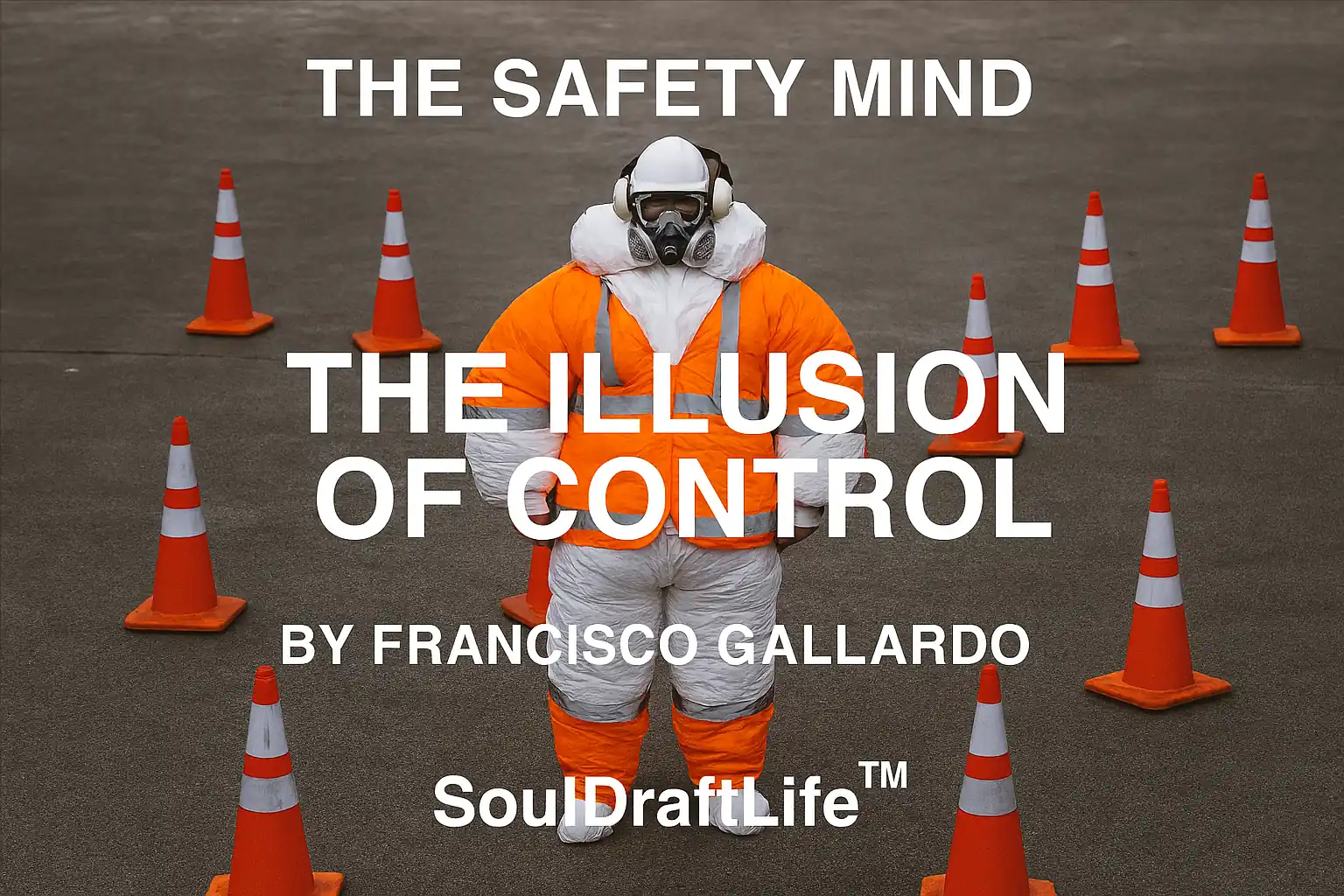
We write policies, build procedures, and define the conditions required for a safe work environment. But somewhere along the way, the stack grows. A new rule here, an added guideline there, another layer of PPE “just in case.” Each addition feels responsible, even necessary. Yet when the layers pile high enough, they stop protecting and start obscuring.
We create a version of safety that looks controlled on paper but collapses in practice. When every movement is regulated, every step is scripted, and every hazard is wrapped in three layers of administrative padding, we unintentionally suffocate the very thing we are trying to protect: the worker’s ability to think, notice, and stay mentally present. Too much control becomes its own hazard; a quiet erosion of awareness disguised as thoroughness.
Strength in Safety Comes from Flexibility, Not Force
This is where the illusion becomes dangerous: after every event, we feel pressure to add more; another rule, another form, another layer meant to prevent the last mistake. But safety doesn’t grow through accumulation; it grows through understanding.
A culture built on clarity doesn’t stack controls; it cultivates awareness. The fundamental foundation of safety lives in the worker’s mind, the ability to recognize risk, stay present, and choose protective action. When we strengthen that internal discipline, the system becomes lighter, sharper, and far more resilient than any binder of procedures could ever make it.
The Safety Mind Asks
- Are we overcorrecting every event and mistaking it for control
- Are we adding layers that contradict our own procedures
- Are we treating symptoms instead of understanding the conditions beneath them
- Are we building clarity, or just building volume
- Are we strengthening awareness, or burying it under more rules
Reflection
We have to defend our policies and procedures. We must be firm, ensure compliance, and protect our people; that part never changes. But we also have to make sure our systems don’t become so rigid that they break. Safety can’t be a cycle of adding more after every event; it has to stay rooted in awareness. When we strengthen the mind behind the task, the culture becomes lighter, clearer, and far more resilient.
The Safety Mind insists
Control is not the absence of uncertainty. It is the discipline of staying aware, adaptive, and honest about what we cannot command.
Lee este artículo en Español: La ilusión del control
Practical Note
SoulDraftLife™ uses SHOKZ bone‑conduction headsets in environments where situational awareness, communication, and hearing protection must coexist.
Bone-conduction technology enables communication and environmental awareness while wearing single or double-hearing protection, without isolating the wearer from their surroundings.
Depending on context, this includes models designed for industrial communication, training, and coordination, as well as active or lifestyle use, such as the OpenComm, OpenMeet, OpenRun Pro, OpenRun, OpenDots, and OpenFit series.
Previous Safety Moments:
SM‑1: The Safety Mind Introduction | SM‑2: What Is The SAFETY MIND? | SM‑3: The Safety Mind Disclaimer | SM‑4: The Psychology of Risk | SM-5: The Safety Moment | SM-6: When Mind Becomes Moment | SM-7: The Human Side of Safety | SM-8: The Perception of Risk | SM-9: Why We Misjudge Risk | SM-10: Human Error and Bias | SM-11: Group Dynamics and Silence | SM-12: Fatigue, Distraction, and Focus | SM-13: The Weight of Routine | SM-14: Frameworks as Scaffolding, Not Cages
SoulDraftLife by Francisco Gallardo – December 24, 2025
SoulDraftLife runs on Kinsta because a legacy deserves a rock‑solid foundation.