Why We Misjudge Risk
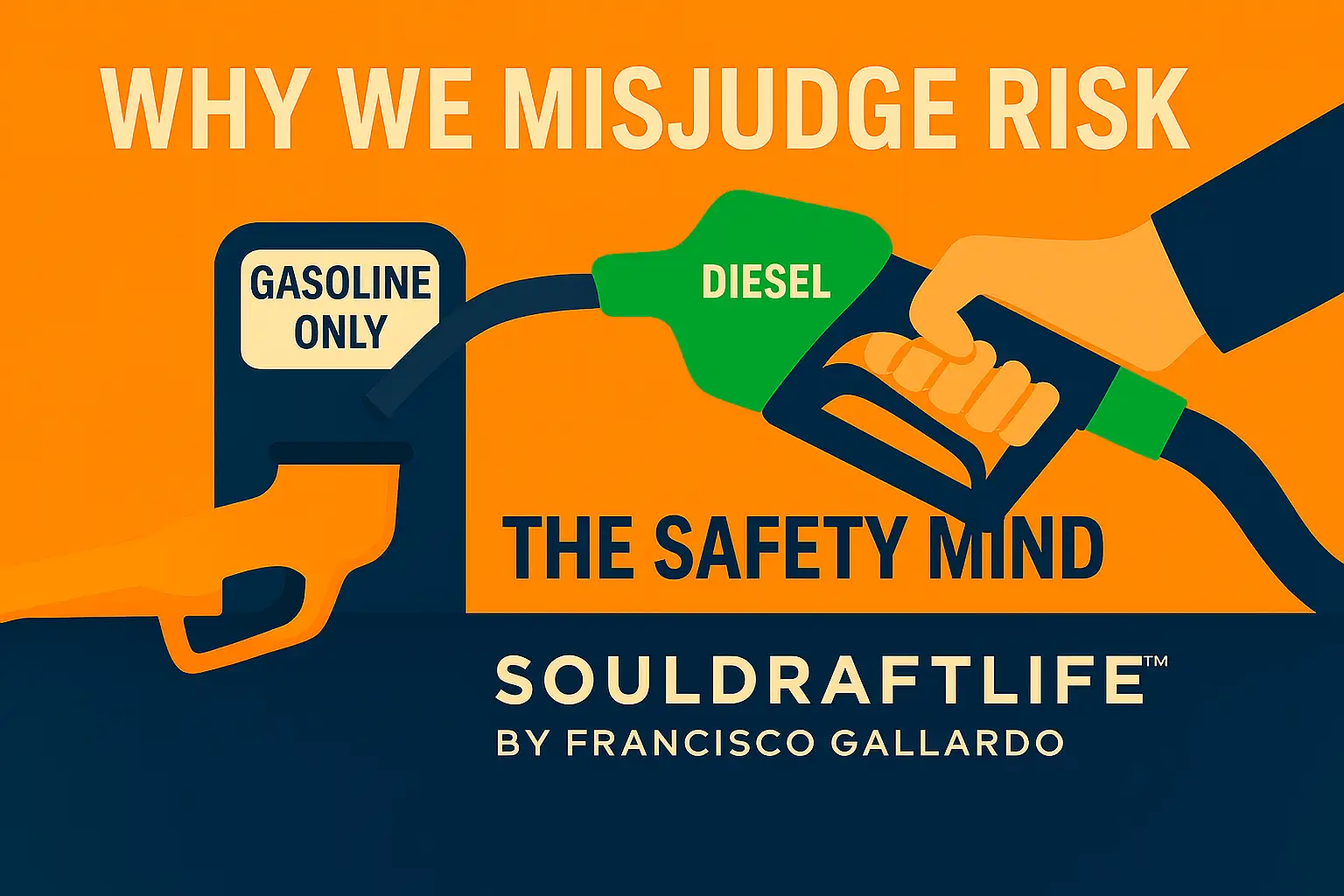
SoulDraftLife™ | The Safety Mind | SM-9
Why We Misjudge Risk
The Danger We Think We Know
The greatest risks are not hidden from us; they are the ones we believe we already understand. Familiar machines, repeated shortcuts, and a team’s silence can all disguise danger. Risk doesn’t vanish; it slips beneath our perception.
Familiarity and Control
Routine convinces us that repetition equals safety. Skill creates the illusion that we are in control. Together, they dull awareness until hazards fade into the background.
Silence and Culture
When no one speaks, we assume there is nothing to say. Peer influence normalizes shortcuts; culture turns unsafe practices into accepted habits. What feels safe is often just what feels familiar.
Fatigue and Drift
Fatigue narrows vision, stress blinds judgment, and when shortcuts are repeated without consequence, they stop feeling like shortcuts at all. This drift is one of the most dangerous distortions.
The Safety Mind Response
The Safety Mind does not erase these distortions; it names them. Naming creates awareness, and awareness is the first defense.
The Safety Mind Asks
- What risks do you dismiss because they feel routine?
- When skill makes a task feel effortless, do you mistake that ease for control?
- How often do you equate silence with safety, rather than a warning?
- When was the last time you questioned a “normal” step before it failed?
Reflection
Clarity, not confidence, is what keeps us safe. Familiarity convinces us that repetition equals protection, but the familiar often blinds us. The next time you move through a routine, pause and ask whether you see the task as it is, or as you expect it to be. Safety is not found in the comfort of habit, but in the discipline of looking again. Because clarity is not a feeling but a choice we make each time we act.
Clarity is awareness renewed; the pause that restores presence and carries us to closure.
Lee este artículo en Español: Por Qué Juzgamos Mal el Riesgo
Practical Note
SoulDraftLife™ uses SHOKZ bone‑conduction headsets in environments where situational awareness, communication, and hearing protection must coexist.
Bone-conduction technology enables communication and environmental awareness while wearing single or double-hearing protection, without isolating the wearer from their surroundings.
Depending on context, this includes models designed for industrial communication, training, and coordination, as well as active or lifestyle use, such as the OpenComm, OpenMeet, OpenRun Pro, OpenRun, OpenDots, and OpenFit series.
Previous Safety Moments:
SM‑1: The Safety Mind Introduction | SM‑2: What Is The SAFETY MIND? | SM‑3: The Safety Mind Disclaimer | SM‑4: The Psychology of Risk | SM-5 The Safety Moment | SM-6 When Mind Becomes Moment | SM-7 The Human Side of Safety | SM-8 The Perception of Risk
SoulDraftLife by Francisco Gallardo – November 12, 2025
SoulDraftLife runs on Kinsta because a legacy deserves a rock‑solid foundation.